
Fear

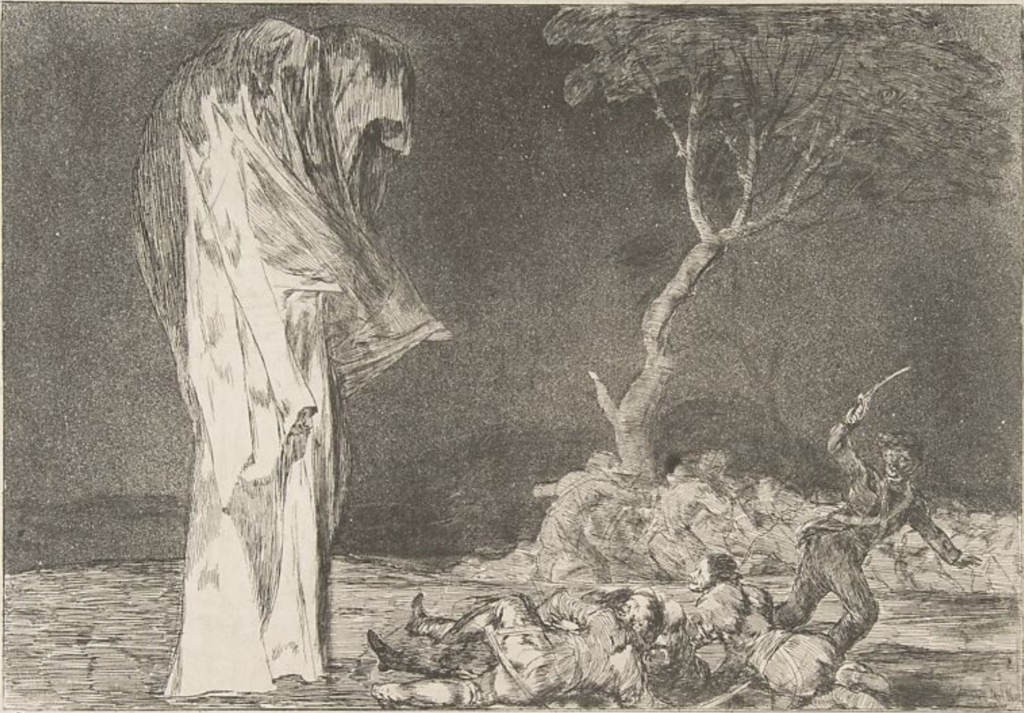
Guiding question: How does fear limit our capacity for effective engagement within transforming systems?
Way back in 2002, I was graduating from high school, getting ready to go to college. I didn’t know what I wanted to “be” at that time, but I was certain there were well-established paths for me to choose from.
I remember browsing through the list of majors, wondering who I would be, like someone struggling to decide what they wanted for lunch.
After years of indecision, eventually I chose a path. Now, decades down the road and some twists and turns later, my career has become an important part of my identity.
In some ways, this identity has served me well. However, I’m getting a clear sense that it won’t moving forward. Things have shifted.
Moving forward today is not what it was in 2002.
There are no stable paths to follow. There is no menu of reliable options to choose from.
There is massive uncertainty. And by nature, uncertainty brings fear.
Reflect: How are you relating to the uncertainty of the present moment? How does fear show up for you?
For me, I can trace a lot of the symptoms back to a fear of not being enough as I am. It’s the fear that I won’t be able to handle what’s coming, that it will be too much. That I won’t be able to protect my loved ones like they need me to.
There are plenty of current sources feeding this self-doubt, given the amount of doomsday scenarios flying around. It’s easy to feel overwhelmed by it all.
Yet I’m also making a connection between this experience of overwhelm and the conditions of my learning and education.
I was taught to rely on the well-established path, laid down by the “experts.” Knowing it was there comforted me against the fear of not being enough.
If I followed their instructions and worked hard, I would be ok. This belief is rapidly disintegrating.
So what now?
One thing that’s becoming clearer is that deeper developmental work is needed now. The learning and education of our relatively-stable past was superficial.
For those of us well into our careers, we likely have some challenging work to do to detach ourselves from our well-worn professional identities. This will enable us to evolve into the roles of the future, which are now largely unknown.
For younger folks still trying to figure out who they are, I believe this represents an amazing opportunity.
Instead of being pressured to pick a mask off the shelf, there is an opportunity to develop their essential selves.
They may not have to “fake it ‘til they make it” like we did.
Yes, they will have to face the real fear of not being enough without putting on a mask.
What if our systems of learning and education were redesigned to help them face this fear and develop their essential selves, rather than trying to mold them into a pre-defined professional identity?
Reflect: To what degree are you being challenged to let go of your own professional identity in today’s transforming world of work? How might the process of doing so integrate with your evolving role in redesigning systems of learning and education?
As I hold these questions, I can feel the fear.
I can observe a strong resistance to losing my sense of who I am—even the false and superficial part of it.
I’ll offer a premise here for our continued reflection and testing:
Underneath the superficial, false identities we’ve been conditioned into, there is an essential self that is needed now. It has been hidden and is therefore underdeveloped. Our work now, as our false identities no longer serve us moving forward, is to face the fear of not being enough and to begin developing our essential selves.
Perhaps someday, people won’t have to wait so long in life to come back around to who they truly are.
What’s your work to do in this developmental process?
Get a short email every Friday morning with a similar prompt to help catalyze your reflective practice.