
Fabrication

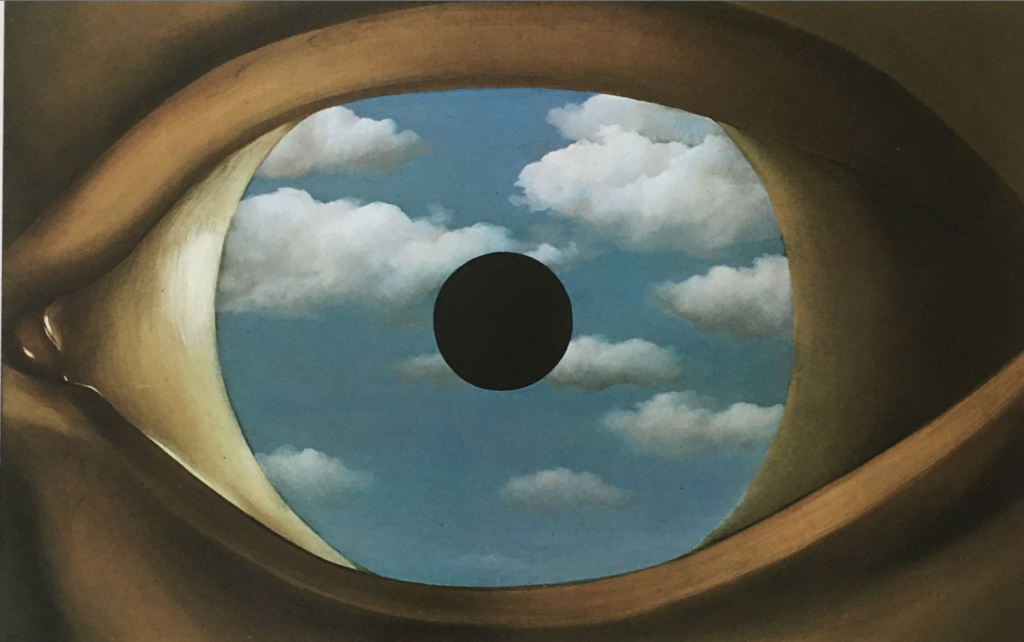
Guiding Question: How is myopia limiting my capacity for effective engagement?
Fabrication has a lot to do with our relationship to the unknown.
One tendency to observe is that of filling in the gaps in our own understanding, fabricating stories about the people, places, and things in our world. This helps us to buffer the discomfort of uncertainty.
Yet in protecting ourselves from such discomfort, we also prevent ourselves from developing real understanding. Our thinking is full of untested assumptions and delusions.
Take a moment to observe this pattern in your own experience. What’s coming to light?
If the image of this pattern is fuzzy, aim to get concrete. Bring to mind a specific place, such as your organization or local community. Where are you filling in the gaps with fabricated stories? What assumptions are you making about the people there, or the way things work there, which you haven’t really examined and tested?
For me, I’m starting to see that I do this far more than I realized. I’m holding in mind the place where I live. There is so much I don’t understand about it. Yet I typically relate to it from a place of “knowing,” believing that I pretty much have it figured out.
I can sense the comfort in that belief, but there’s also a certain dullness to it. From a place of knowing, there is nothing to discover. There are only problems to solve to keep the wheel turning. One after another.
Reflect: How does greater awareness of this pattern enable us to realize place-sourced potential? How is this showing up for you now as you hold your place in mind?
The Nested Systems framework can help us develop our ability to image place-sourced potential. I invite you to try it as a lens to generate new connections and explore potential.

What is required of you to see more of the unique potential within your own set of nested living systems? What does this mean?
As I reflect on this myself, I can see the buffer at work. For example, I’m observing how I tend to think about my neighbors. In many cases, I’ve assigned certain categories to them, which allows me to feel like I know them well enough. I use this to justify keeping a safe distance.
The same pattern shows up at work, more than I’m often willing to admit.
It’s a struggle to see this and sit with the discomfort of it.
Yet I can also sense a new quality of will emerging in this space. It feels deeper than the motivation to be “one who knows.” It is the will to really understand, to free myself from these delusions that have kept the world foggy, distant, and dull for so long.
Reflect: What kind of process does this shift in will and motivation invite us into?
Consider joining me in practicing with this today and over the next week. We can keep it simple at its core: observing the buffer at work, recognizing it is designed to protect us from the discomfort of the unknown by filling in the blanks in our understanding with fabrications.
The aim is to observe this without judgment. Just see it. See what happens to it when we shine some light on it.
What happens to the dullness of perpetual problem-solving? What new potential is revealed?
Get a short email every Friday morning with a similar prompt to help catalyze your reflective practice.