
Chapter 4: Ordering Value-Adding Activity

“The alternative to good design is always bad design. There is no such thing as no design.” – Adam Judge
Taking initiative as a designer
At this point in our journey, we’ll make a transition from exploring the disciplines of realizing potential (Seeing Wholes, Embracing Creative Tension, and Transforming Relationship) to those of actualizing potential—beginning with Ordering Value-Adding Activity.
A primary focus in this transition is becoming a designer. What is a designer? Here we are not referring to a profession, but to a mindset—a way of being in and relating to the world. As designers, we possess initiative and agency. We do not wait around for others to tell us what to do or provide us a roadmap to follow. We act strategically and intentionally in the face of uncertainty and rapid change. Why do you think this is necessary in today’s context?
“To be a great designer, you need to look deeper into how people think and act.” – Paul Boag
In this chapter, we focus on becoming designers of our own actions, with the aim of evolving our value-adding roles. Beyond what we do, as human beings we have a source of motivation and a state of being which not only determine what we do, but how and why we do it. To become effective designers, we must be willing to see this process as a whole, examining the factors upstream from our decisions.
This also has important implications for the development and integration of AI. How are we navigating the process? How are decisions being made? Where are we sourcing those decisions from? Where are there opportunities to create value and develop our roles through this process?
Values-based decision-making and the alignment problem
AI is fundamentally different than other ‘tools’ in that it has the (growing) capacity to make decisions without us. How does an AI decide what to do? Within this question we confront the alignment problem: the challenge of aligning AI decision-making with “human values.” Arguably, every future nightmare scenario related to AI has to do with some sort of misalignment—AI acting in ways that are counter to what we value as human beings.
The alignment problem, of course, is deeper than merely a technical challenge. What exactly are “human” values? Collectively, especially between groups and cultures, there can be a wide divergence in value systems. Of course, this is also true between individuals within a group or culture. Even more fundamentally, when we begin to examine our own values as individuals, we find something far messier and more complex than we might expect. With very few exceptions, we are not even in alignment with ourselves.
This illuminates a critical shift in how we think about developing AI: from seeing it as a set of new tools created by technical experts, to seeing it as a participatory developmental process—an opportunity (or more accurately, an imperative) to evolve ourselves to higher levels of coherent, value-driven action across multiple levels: as individuals, teams, organizations, communities, etc.
The fragmented self
An important concept in the Fourth Way Work is that we are not one, but many. In other words, we are in a fragmented state—we carry around conflicting internal narratives, beliefs, and values, which push and pull us in different directions. According to Gurdjieff, this is one of the basic realizations we must come to before we can truly engage in the Work.
A fundamental part of the Work is developing the capacity to observe and discern these conflicting internal narratives. Take a moment to see these at work within yourself. Where do you observe old stories running on a loop, or coming up in certain situations? How do they conflict with other stories you are holding? Where do they come from?
Of course, these are challenging questions with often unclear answers. What is required of us to see these patterns more clearly? Why does it matter? Hold these questions lightly for the moment, let them resonate, and we’ll return to working on them later in a more specific context.
A basic invitation is this: if we have any hope of creating alignment with AI, we are now being called to this deeper inner work as part of the process. We are facing an opportunity to work directionally toward greater alignment across human systems, generating a higher degree of harmony. This begins with working toward greater alignment within ourselves as individuals.
What is value?
As our focus here is on developing our value-adding roles, it begs the question, “what is value?” There are numerous ideas and philosophies about the nature of value which we won’t get too bogged down with for our current purposes. Yet if our aim is to create value, it will surely help to have some understanding of what value means. The basic concept we’ll explore here is that there are orders of value.
With this in mind, I’ll offer up a definition of higher-order value that I believe is grounded in the lineage we are exploring here:
Higher-order value is that which enables an individual or living system to express its uniqueness more fully in a co-evolutionary, value-adding process.
In other words, higher-order value is something like a ripple effect of value-adding activity. It is fundamentally developmental in that it works to develop the unique value-adding capacity of others. It serves to support individuals or larger systems to contribute more, in a way that is aligned with their authentic selves or essences.
We can distinguish this ordered view from a purely subjective or relativistic view of value, where value is entirely determined by individual desires. On one level, this subjective view I believe is valid. People do generally act based on what they desire in the moment. On another level, the degree to which actions are value-adding varies. I may decide to act in a way that satisfies a personal desire which is of no value, or even negative value, to others. Further, considering the insight that we are not one but many, I may be acting on a desire from a part of me that is self-destructive or delusional. The developmental aim is to evolve our desires in a way that makes them more value-adding.
What this lineage provides is an element of objectivity in our aim to create value: the view that each individual and living system has a unique essence and a calling to express that uniqueness in a way that benefits others in a fundamental way. This does not eliminate subjectivity and the necessity for self-determination; it contextualizes it within a larger whole. It does not imply an external authority determining value, but a process of increasing coherence between essence, action, and consequence within living systems.
If nothing else, I would propose this is a pragmatically useful view when it comes to exploring and developing unique value-adding roles. As we develop into more coherent, less fragmented states, our individual desires become more aligned with our essences and that which we are being called to uniquely contribute. We will dive deeper into this in the next chapter.
Caring as a uniquely human capacity
“What is crucial is that computers cannot be made to face genuine human dilemmas. They are not moral agents. They do not care.” — Joseph Weizenbaum, Computer Power and Human Reason: From Judgment to Calculation
Arguably, caring is foundational to what separates us from the machines. As the opening quote from Weizenbaum points to, machines can’t care. Caring refers to something beyond a functional calculation. As with value, we can see that caring exists on multiple levels and we can aim upwards. Higher-level caring is not merely a fleeting emotion, but a capacity to serve the unique potential of another. On the lower levels we may care, but only about ourselves or our group at the expense of others. Creating more strategic value for others involves expanding our scope of care as we level up, without losing what matters to us most.
With transparency, I find myself struggling with this one because I recognize the risk of coming off as preachy which I really want to avoid. There are many important things easier said than done. I’ll take the opportunity to reiterate that I am right here with you in this Work, making no claim to authority or expertise. I’m writing this not because I’ve mastered anything, but only as part of a process of developing these capabilities myself. Like most of us, I have a lot of work to do. I too often collapse into acting from lower-order levels which are of limited or no real value to others.
Ordering value-adding activity with the tetrad
To begin our exploration of the discipline of Ordering Value-Adding Activity, we’ll play with Bennett’s tetrad, or four-term framework. Note that I use the term play here very intentionally. Hold it lightly—aim to have some fun with it. Stay connected to the idea that design is creative.
In Elementary Systematics, Bennett writes, “[The tetrad] relates to activity and answers the question, ‘What is happening here and why?’”
Using the tetrad, we will get to work redesigning our value-adding activity in a way that will enable us to evolve our unique roles through the process. We’ll begin with a basic version of the tetrad from Bennett:
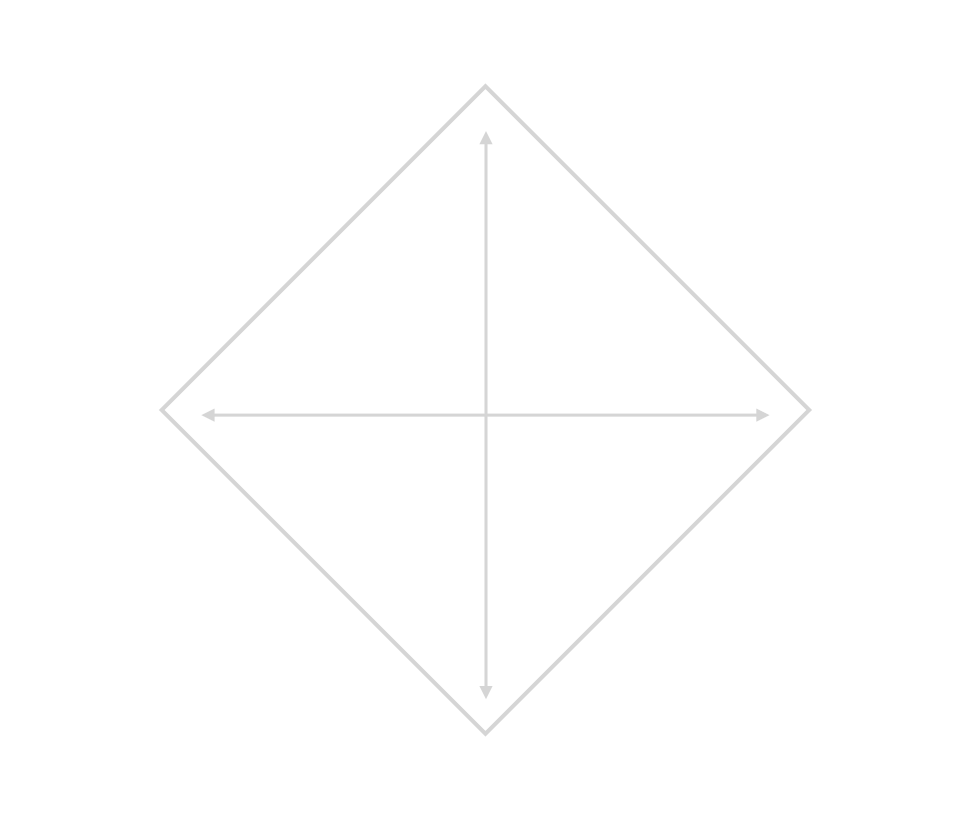
Before we unpack the framework, bring to mind a specific project or activity where you feel you are struggling to actualize the value-adding potential you are sensing—an activity where you sense an opportunity to reorder things so that more of this potential can be made manifest. As always, our focus is to work on something real and concrete as we explore new territory.
As you read through a brief description of each of the four terms of the tetrad, reflect on how they relate to how you are currently designing value-adding activity within your role or roles.
What specific patterns are being illuminated? How do they relate to the struggles in actualizing potential you are experiencing?
Defining the terms of the tetrad
The first two terms of the tetrad relate to motivation:
- The ground represents your fundamental reason for undertaking a particular activity. Why are you doing this? What is the source of your motivation?
- The goal represents what you are trying to accomplish through this activity. What exactly are you aiming at? What is the target outcome?
The second two terms relate to the means of engaging in this activity.
- The instruments represent how you are navigating the value-adding process. How are you engaging others in the process? What tools or technologies are you using? Who is involved?
- The direction represents how you are orienting and re-orienting yourself through the process. What is the long-term, big-picture vision you are working toward? How are you staying aligned to this vision as conditions shift and pressures arise?
Now take a moment to hold these four elements together as a whole as you reflect on the activity you chose. What insights are emerging around what is required to actualize the potential you are sensing for this activity? If it’s not exactly clear yet that’s ok—we’ll dig in a bit more with this question in mind.
Thinking about value-adding activity on multiple levels
To help us further explore the tetrad and how it can inform how we can create higher orders of unique value through our roles, let’s bring back the Levels of Value-Adding Roles framework introduced in the previous chapter.
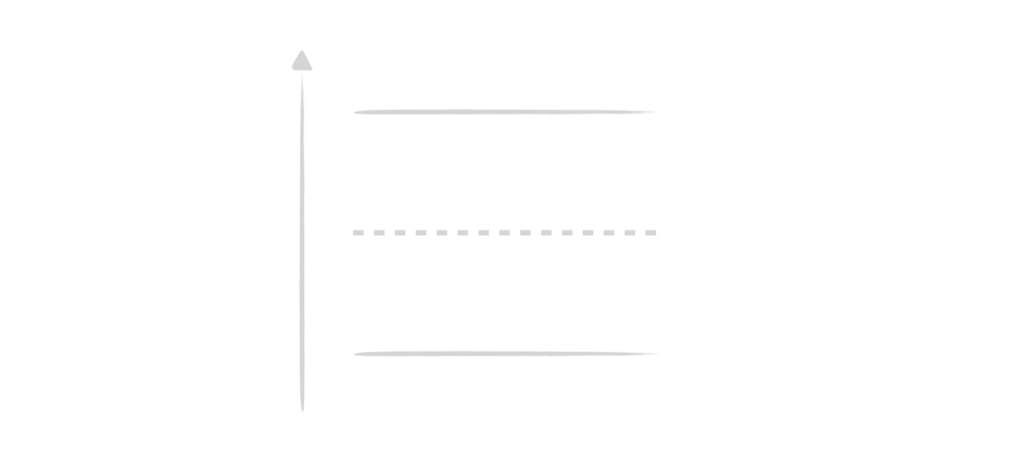
As we’ll explore, the nature of our motivation and means shifts as we move up the levels of value-adding roles. This will help shine a light on what it looks like in practice, shifting to higher orders of value, keeping in mind two key premises:
- Becoming non-displaceable in an AI-integrated world requires developing into higher-order value-adding roles, capable of working from potential.
- Effectiveness at the higher levels requires a foundation of effectiveness on the lower levels.
To help us better hold these levels together as a whole, we’ll present a version of the tetrad for each of the four levels of value-adding roles. Remember that the map is not the territory and these are merely lenses for reflection. Try not to get caught up in having to recall all the terms for each level right now, as that will likely feel overwhelming. Simply hold each tetrad as a whole and try to get a better feel for what it means to engage in value-adding activity at that level. Hold the frameworks lightly. Let them generate new questions and curiosity.
As you reflect through each lens, keep your own activity in mind. What new patterns are coming to light?
Adding Value as an Efficient Operator
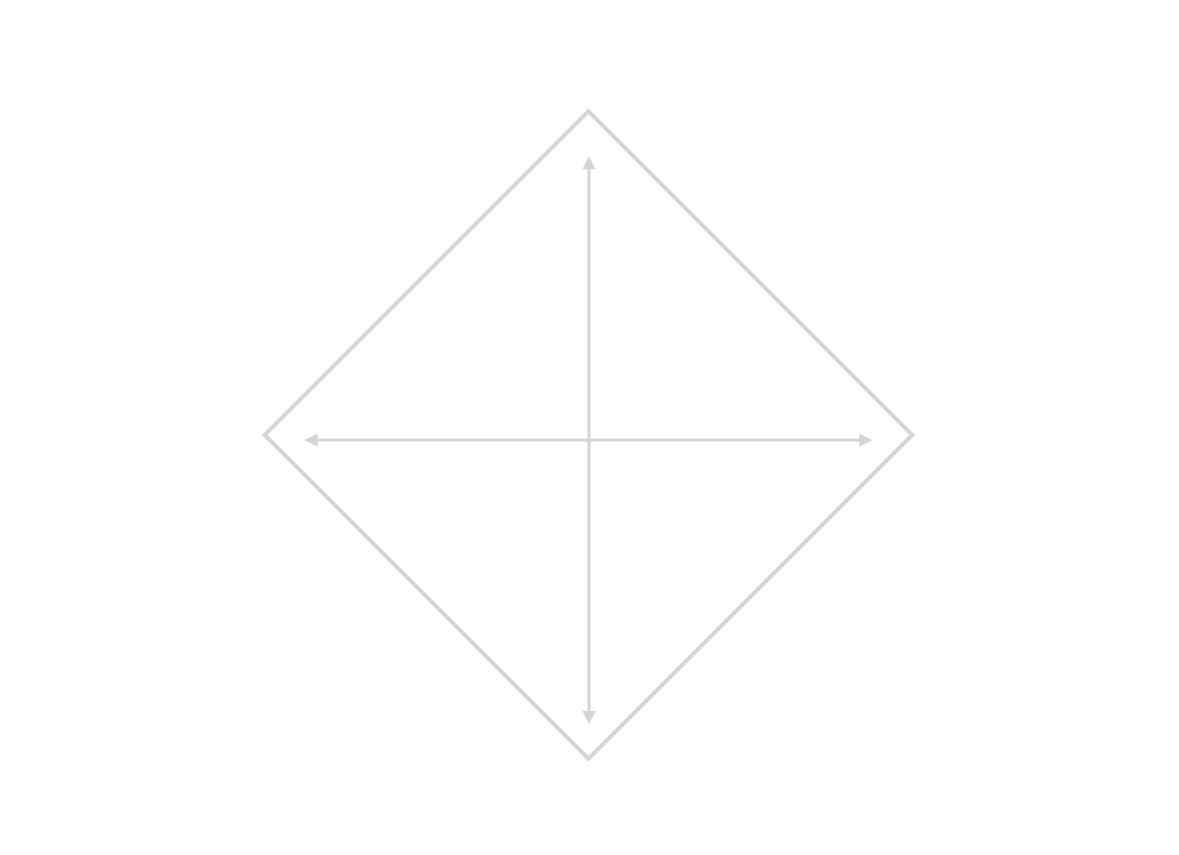
As Efficient Operators, our motivation is sourced primarily from a commitment to our obligations. This is our ground. We have responsibilities to take care of. We have people who depend on us. We don’t want to let them down. We have a sense of duty to do our job well. Our goal is to perform effectively in our role. The means by which we do that is fundamentally programmatic: we follow established best practices and standards which have been laid out for us. On this level, we don’t really have much of a big-picture, strategic direction.
I’ll reiterate a key point here: there is nothing inherently wrong with this level of value-adding role. It is foundational. One problem is when we get stuck here. Another is when we neglect this level and focus only on the higher levels, creating a weak foundation. Keep these two patterns in mind as we move forward.
Adding Value as an Adaptive Problem-Solver
As Adaptive Problem-Solvers, we are engaging in the value-adding process beyond simply going through the motions and following set procedures. We are responding to emerging challenges, grounded in a greater sense of caring for and protecting what matters to us. Our goal is to maintain our effectiveness as things change, requiring us to also change and grow. We do so by creating feedback loops which enable us to pivot and adapt quickly, guided by a vision of sustained activity over time.
As with the Efficient Operator, this level is an important part of building a foundation in existence. When we neglect the facts of existence, we can’t see potential clearly—we become disillusioned by fabrication. At the same time, we also can’t see potential when we get stuck on these foundational levels. We become wrapped up in going through the motions and reactively solving problems, failing to generate the higher-order value that we are being called to create as AI takes over lower-order roles.
Adding Value as a Systems Evolver
As we move into the level of Systems Evolver, we make an important transition from being grounded in existence, to being grounded in potential. On this level, the primary source of our motivation is a deepening sense of care to realize and actualize the potential of ourselves and the systems to which we belong. Here we are going beyond simply sustaining what is, to evolving what is to a higher level. We do so through a process of engaging our stakeholders in a co-creative process, guided by an embodied image of the nested systems we are working on evolved into a higher state.
Here I’ll reiterate another key point, which is that it’s easy to believe we are working on this level when in reality we are still grounded in existence. Working from potential is more than imagining solutions—recall that it requires a deep understanding of the unique essence of a system, as well as how that essence is being called on to serve within the larger whole. We often project a vision of the future onto a system we don’t understand, mistaking this projection for potential. An embodied image, in contrast, is informed by understanding. The term ‘embodied’ here is chosen to highlight that this practice transcends an intellectual, analytic exercise. More on this later and how it potentially distinguishes us from our machines.
Potential is real—it is a state of potential energy, present now, rather than some contrived idea of an imagined future. For this reason, it is to be realized.
Adding Value as a Capacity Regenerator
As Capacity Regenerators, our work is to create a field in which Systems Evolution work can be maintained. The source of our motivation deepens further, from the desire to realize and actualize potential, to working in service to what we will call here Greater Calling. We can associate this with Gurdjieff’s concept of “Real Will”, which is a source of direction beyond self-will, or beyond the individual inner voices that tend to pull us in contradicting directions. We’ll explore this in more depth later, but for the moment we can recognize that this level of role involves deep inner work—learning to discern this calling that transcends our individually-driven desires. For some, this may align with an existing spiritual practice. For others, it may rub you the wrong way. Either way, I invite you to let it sit for a while as we continue to explore.
As Capacity Regenerators, we are not only learning to serve this Greater Calling, but we are intentionally and strategically working to help others develop the capacity to do the same. Instead of pushing others toward a prefabricated vision of the future, we are helping them to understand their own unique context and participate in generating embodied images of unique potential. The primary vehicle for this work is developmental dialogue, using frameworks to develop Will, Being, and Function together, across systemic levels.
On this level we are continuously re-orienting ourselves toward a meaningful image of a future state. Through this practice, we avoid becoming attached to a particular vision of the future which we have formed in a state of relative ignorance. Our vision—and our ability to consciously embody it—continues to evolve as our understanding of our unique context deepens.
Holding the levels as a whole
As mentioned, these levels of value-adding roles work together as a whole. In other words, our capacity to create unique value in our roles increases as we develop on all these levels together.
A primary challenge is that we tend to become fragmented in our thinking about roles. Reflect on this for yourself in your current roles. For example, there may be certain roles, or certain situations, where we tend to get stuck on the level of Efficient Operator—we do our duty, we go through the motions, but we are disconnected from a deeper sense of caring, potential, or calling. There may be other roles or situations where we work hard to adaptively solve problems as they come up, but we are still fundamentally reactive. As a result, we may feel like we are always behind the change, trying desperately to keep up.
Another common pattern, especially for those that are more “purpose-driven,” is one where we are over-focused on potential and are neglecting existence—this is one to remain aware of as we continue to explore these higher levels. This can lead to a state of being disconnected from reality, perhaps sliding into our imaginations or a state of relativism that lacks real understanding. As a result, our capacity to be effective Systems Evolvers or Capacity Regenerators becomes severely limited without a strong foundation as Efficient Operators and Adaptive Problem-Solvers.
How AI fits into the picture
As stated, a core premise here is that developing ourselves into the higher levels of value-adding roles makes us more non-displaceable in an AI-integrated world. AI excels in the data-driven domain of existence. The opportunity for human beings is to develop our unique capacity for realizing and actualizing potential.
Considering the insight that the higher levels are supported by the lower, this calls forth the question: how can we best work with AI to build a strong foundation in existence? How might this technology enable us to spend more time engaging with potential in higher value-adding roles?
As the technology is changing so quickly, I’ll refrain from getting into specifics here. The aim at this stage in our process is to start thinking about this question through the lens of this framework of the Levels of Value-Adding Roles. It is a nuanced process, unique to each of us as individuals, teams, organizations, communities, and so on. Where does it make sense to begin to “offload” lower-level work to AI? Where does it make sense to continue to do this work ourselves?
A primary obstacle
The primary obstacle to Designing Value-Adding Activity, as we’ll frame it here, is solipsism: the tendency to believe that reality exists only in our own minds. This leads to an overly self-referential and self-serving state of being and working. Everything is ultimately about us and ours—we serve this in relative isolation, disconnected from greater existence and potential.
The state of the fragmented self, mentioned earlier, contributes to solipsism by wrapping our attention up in an internal battle of conflicting narratives. The conflict and tension produced by competing stories and ideas prevents us from seeing beyond our “own little world.”
In my personal experience, I’ve observed how elusive this pattern can be. For example, I can tell myself I care about something larger than myself in very clever ways, but I am in truth very much still wrapped up in my own distorted reality. I may see myself as a caring and compassionate person (at times), but I fail to do the work to really understand others so I may serve them more effectively. In such a state, the ultimate concern is not the degree to which I’m creating value for others—it’s how I think and feel about whatever I’m doing. Thus, I protect my delusions accordingly. I avoid anything that may disrupt my own little world.
Coming to grips with this pattern and seeing it more clearly is difficult but essential in this work. There will be Resistance. We enjoy the idea of my truth—we take comfort there. Yet when we do, we become trapped in relativistic bubbles where we are unable to take wise and strategic action for the benefit of a greater whole. We lack the understanding required to do so.
Getting to Work
Use the table below to think through the different levels of value-adding roles, holding them as a whole with the elements of the tetrad highlighted for each. Observe yourself as you do this. How are you responding to these incoming impressions? Where is there resistance? What old stories are coming up?
Reflect on the following questions and capture any insights coming up:
What is required of you to evolve in your role or roles toward a greater state of coherence across all levels?
What does this illuminate about what must be activated to move in this direction? How might you articulate a next-level aim?
What current facts of existence are restraining this aim? What is being neglected? Where are you fragmented in your thinking or action? Where are you experiencing the obstacle of solipsism, or a disregard for existence beyond “your little world”?
How does this relate to navigating the process of integrating AI in your world? What new opportunities are coming to light to work with AI to build effectiveness on the lower levels of existence and enable higher-level, potential-focused work?
Now make a rough sketch of the tetrad, articulating a key shift you need to make within each of the four elements: ground, goal, instruments, and direction. Try to make these concise and actionable. Aim for the next step in your practice of engaging in value-adding activity—challenging enough to invoke will to do the work and move in the right direction, not so challenging that it is out of reach. Keep this sketch in a place where you can continue to reflect on it moving forward.
In the next chapter, we’ll build on what’s coming up here by exploring the discipline of Honoring Uniqueness. What does it really mean to create unique value? How does this relate to shifting further into working from a more authentic sense of what we are being called to uniquely offer?
Participate in the Process (No Cost)
Fill out the short form to receive updates when new chapters of the book are published, along with prompts to share your reflections and invitations to free workshops and coaching sessions. No spam, unsubscribe anytime.