
Two-Way Observation

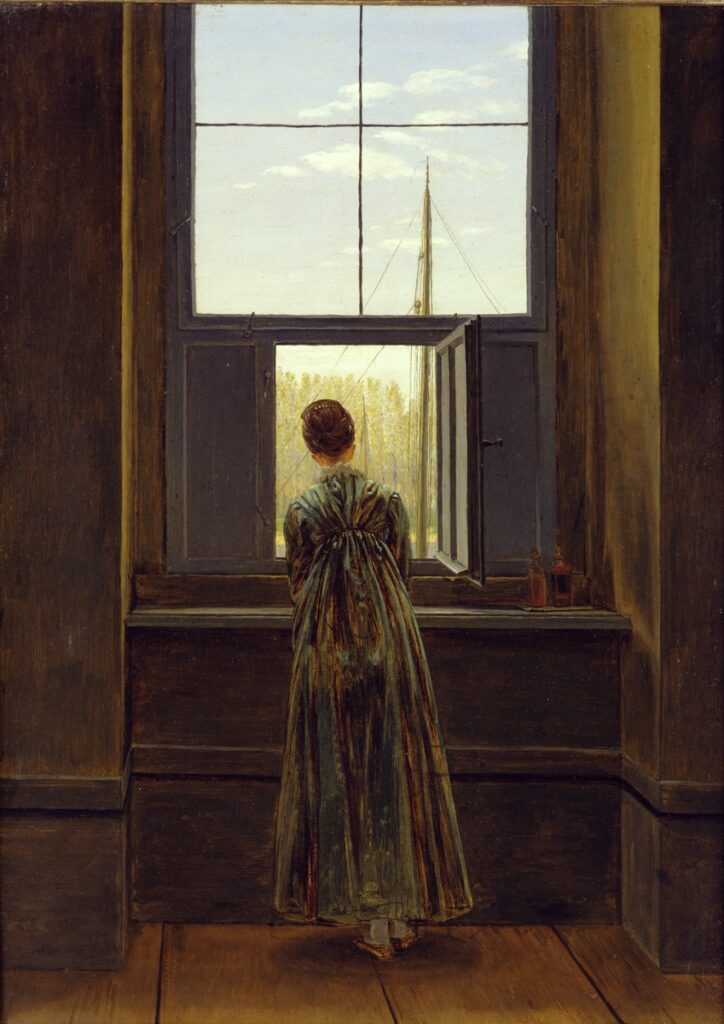
Guiding question: How does two-way observation enable us to make wiser decisions in complex environments?
I’ve been working with a couple of different government agencies in the emergency management space, designing and developing some new learning programs and performance support resources.
These are the people who respond to wildfires, earthquakes, tornadoes, hurricanes, and even terrorist attacks. The work can be extremely dangerous and even life-threatening. They all have “war stories” of friends that didn’t make it home to their families.
Making effective decisions within such environments is not as simple as following a script.
One critical capability we are focused on developing has to do with assessing the complexity of a situation. Part of this includes considering what they call “human factors.”
In other words, how do we understand our limits given the unique situation as well as our current mental and physical state? What does understanding this require of us?
As we develop the project, I can see us coming up against the limits of old learning paradigms in our aim to cultivate this critical capacity in our learners.
For example, within the mechanistic and behaviorist paradigms, which emerged in an industrial context, the focus is on creating controlled environments that clearly direct behavior. In a factory full of predictable machines, such approaches work relatively well.
In a burning forest, however, things aren’t so predictable. Far more often, people have to think “on their feet.” Things can change fast and there is no clear script to follow.
The behaviorists explicitly dismissed the role of introspection in learning. There was no time for deeper reflection on the factory floor.
In the burning forest, a wildland firefighter often needs to do some soul-searching before they make a decision that could cost them—or others—their lives.
Reflect: Is there a critical decision you are facing right now that feels complex and high-stakes? What does your process look like for making such a decision?
I’m reflecting on how this relates to the practice of self-observation, as it’s defined in the lineage of developmental work we’ve been exploring (read more about the lineage here).
Self-observation refers to our capacity to observe both our own actions as well as our internal states behind them.
For example, in facing a difficult decision, a firefighter may need to consider that it’s the end of a long shift and they are mentally and physically exhausted. Perhaps they having a hard time concentrating due to a personal issue at home. Or they might be new on the team and feel some pressure to prove they are capable, brave, and hard-working.
Making the right decision in this situation requires more than knowledge. It requires consciousness.
The firefighter needs to be able to observe themselves as a complex human being. There is an ego that wants to go for it to impress the supervisor. There is an internal dialogue of clashing, contradictory ideas and stories, pulling them in opposite directions.
What happens to the person with no capacity for introspection and discernment in these types of situations?
What happens to the one that remains on autopilot, lacking conscious awareness? Or the one that blindly and unconsciously follows the loudest inner voice of the ego?
One premise for our reflection and testing: As the world becomes more complex and uncertain, this is a capacity that needs to be developed in all of us.
Unlike the wildland firefighter, most of us don’t face life-or-death decisions on a regular basis. Yet there is an underlying principle that may translate.
We no longer live and work in highly controlled, predictable environments where we can simply “follow the script” to “success.”
Yet many of us can feel the gap, not only in our capacity to observe ourselves in this way, but also in the systems of learning and education required to support this type of developmental work.
There is also more to this story. Challenging the mechanistic and behaviorist approaches to learning is nothing new (though they still dominate in many systems).
Beyond them, we find more human-centered, or learner-centered approaches, where reflection and introspection are a key focus.
Yet something is potentially missing.
The effective wildland firefighter isn’t just focused on their own actions and internal states. They have to consider these within the context of the complex, dynamic living systems they are nested within.
They need the capacity for conscious, reflective observation, both inward and outward. We’ll call this two-way observation.
This is where many learner-centered approaches, in my experience, are incomplete. They focus inward but neglect developing the capacity to see ourselves as nested within complex systems.
If you’re waiting for the big reveal, allow me to disappoint you.
This isn’t a complicated technical problem. In other words, there is no expert technician waiting for your call with a ready-to-roll-out solution. There is no script we can follow to learn how to be more conscious, reflective practitioners who can think without a script.
Reflect: Take a moment to pause and closely observe your surroundings, while also closely observing your own internal state. What do you notice that you normally miss? What’s required of you in your own practice to continue to develop this capacity?
For me, when I try this, I experience a glimpse of a new level of awakeness and aliveness. I also realize that it is very far from my current default state. Most of the time I’m wrapped up in my thoughts, seeing clearly neither my surroundings nor my own internal states.
Here’s another premise for testing: As designers of learning and education systems, we can’t support this type of deeper developmental work if we aren’t committed to evolving this capacity within ourselves.
I’m aiming to test this in my own experience with the project I mentioned.
What opportunities will we have to develop this capacity together? I don’t know. I’ll have to do my best to stay awake and recognize them when they come to light.
This will be a challenge. I know I’ll get sucked back into the dominant paradigms, which have largely shaped my current default state and which often operate unconsciously.
I’ll be tempted to take the easy path, meeting stakeholder expectations by providing scripts for learners to follow.
What’s required to disrupt these expectations? How does it relate to our capacity for two-way observation? What new value can we create through developing this capacity alongside our stakeholders?
Get a short email every Friday morning with a similar prompt to help catalyze your reflective practice.